
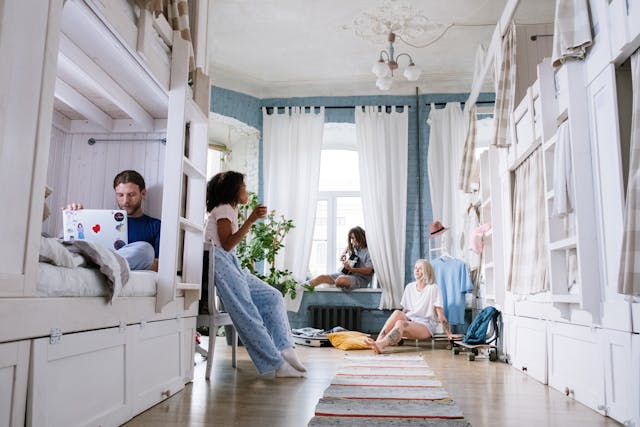
A “shared space” is any area that two or more people use. This could be public, such as a bus stop, library, or restaurant. It can also be private, such as a bathroom, living room, or closet. The people who use this area have overlapping needs, preferences, and routines.
How we navigate shared spaces can either create connection and cooperation or conflict and resentment. It just depends on how boundaries are handled. Healthy boundaries in shared space happen when there is mutual respect, clear communication, shared values, and awareness of personal and collective responsibility.
The Psychology of Shared Space
Humans are naturally territorial. When we enter into a classroom for the first time, we pick a chair and “claim” it for the duration of our time in that space, don’t we?
Now imagine that you have staked out your chair and the next time you came into that space, you found someone else sitting there. How would that feel? Or imagine that you came into the room and the chair was moved. You’d feel something about that, wouldn’t you?
There are unspoken rules for shared space. Our presence and the way we interact in shared space can either enhance harmony or create division.

Common Boundary Challenges in Shared Spaces
Let’s explore some common ways that we can disrupt peace and create tension.
Physical Boundaries: This deals with things that can be touched. Some examples are: borrowing things that aren’t yours, touching or moving things that aren’t yours, sitting on someone else’s bed without an invitation to be there. Touching a person’s body is another physical boundary violation. Leaving your things in shared space or requiring others to clean up or work around your mess is another.
Sensory Boundaries: The senses are sight, sound, taste, touch, and hearing. Some examples are sound levels (music, tv, voices, etc), smells (body odor, cooking smells, etc.), and lighting preferences.
Time and Energy Boundaries: Some examples are overstaying your welcome, monopolizing shared spaces, interrupting other’s routines, or not noticing or respecting when someone is tired and needs a break.
Emotional and Psychological Boundaries: Some examples are oversharing, “trauma dumping” or unloading stress, or expecting someone to take care of your emotional needs. If an interaction isn’t mutually rewarding. it’s probably unhealthy.
As you can see, there are lots of ways that we share space. How we engage in that space, whether someone else is physically present when we are there or not, impacts the emotional safety of that space and how comfortable it feels. If the space is not comfortable, people will avoid it and not care for it.

How to Share Space Well
The first thing we need to be aware of when sharing space is ourselves. What are my own needs, triggers, and habits? What do I do that increases the comfort of the space? What do I do that detracts from the shared enjoyment? How would I like to share space with me? If I am doing things that might irritate others, perhaps I can rethink that or adjust somehow.
Another thing to consider is respect for others. While I my needs and wants are important, so are the needs of others. They have an equal right to enjoy the space the way that they want to, even if their needs are different.
When there is a difference in values or preferences, clear communication helps. When both parties agree on how the space will be used, peace happens. For example, “Can we agree to have quiet time until 7:00 a.m.?” or “Is it agreeable to you to have the living room straightened before bed so we both wake up to a neat home?”
Establishing boundaries before there are problems is useful. Keeping guidelines clear and specific also helps to avoid problems later. Additionally, being consistent is key. You can’t bend the rules when it’s convenient for you or else there are no rules.
As this is “shared space,” the responsibility for its maintenance is shared. Ideally this means that the rules are also created through collaboration rather than dictating them. When it’s a public space, like a park or restaurant, the golden rule of “Do unto others as you would have them do unto you works.” So, if you don’t want to sit on a public toilet seat that has pee all over it, don’t leave it that way for others to find.
And finally, be flexible. We do want consistency, but not rigidity.

Practical Tips for Shared Spaces
If this is a new idea to your family, you may want to define which spaces or items are shared and which are personal so that it’s clear to everyone. You may have personal spaces within shared spaces. For example, a drawer within a dresser could be mine, while the dresser itself is ours. Or a chair in the living room is mine, but the living room is ours.
Before implementing boundaries, make sure everyone is clear on what you’re talking about.
Honor privacy. Knock before entering rooms. Don’t peek in private files, diaries, or phones. Don’t eavesdrop on private conversations.
Leave no trace. This is a rule for being out in nature that works well in all shared spaces. If the space is pristine and left nice for others, it’s always appreciated. This means to clean up after yourself and put things back where you found them.
When in doubt, be conservative. Expect that others don’t share your taste in music or desire your volume, and wear headphones. Keep your physical distance unless you’re invited closer. Bathe so that others don’t have to smell you. If others aren’t as engaged as you are, keep it short.
How to Handle Boundary Violations
Boundary violations happen. When they do, address it quickly, but not until you are calm. The chances for things going sideways increases if you are not calm.
Communicate directly, not passive-aggressively. Don’t hint. Use “I” statements and state what you saw and felt. For example, “We agreed to keep the dog out of the living room. I feel disrespected when I see dog hair on the couch. How can we resolve this issue?”
If the boundaries are repeatedly violated, and this is shared living space, it may be time to reassess compatibility. Everybody has different levels of tolerance. Your home is your sanctuary, your refuge from the outside world. If it is not, perhaps changes need to happen to make it so.
The Benefits of Healthy Boundaries Within Shared Space
When everyone has a sanctuary, the baseline level of stress is low. There is increased levels of trust because everyone feels respected. The space invites safety and belonging so we all enjoy being there.
There is also freedom to be ourselves, and that increases both self-esteem and a sense of community.
The only downside is the growing curve it might take to learn how to have healthy boundaries, but once that is overcome, you have a skill that will benefit you in every relationship for the rest of your life. So, that’s not really a downside at all!
Happy, Healthy Shared Spaces
Humans needs community. In order to have that in a safe way, we need safe shared spaces. In order to have safe shared spaces, we need healthy boundaries.
Healthy boundaries aren’t barriers to connection, freedom, or happiness. They are bridges that allow people to be connected without compromising who they are. By practicing self-awareness, respect, and honest communication, we create the space where we can all flourish rather than only one person, or nobody, can be comfortable.